The operator
Toll Remote Logistics has operated Christmas Island Airport, along with Cocos (Keeling) Islands Airport, on behalf of the Commonwealth of Australia since 2009. Toll Remote Logistics is part of Toll Group. Find out more at tollgroup.com.

Toll Remote Logistics has operated Christmas Island Airport, along with Cocos (Keeling) Islands Airport, on behalf of the Commonwealth of Australia since 2009. Toll Remote Logistics is part of Toll Group. Find out more at tollgroup.com.
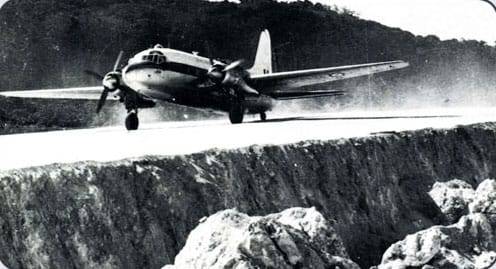
The first passenger aircraft landed at the current airport on 6 June 1974. The terminal was built in 1992, and the asphalt runway is 2,103 metres long.
The island's original airstrip was a gravel strip at South Point, used during the Second World War. Amphibious aircraft landed at Flying Fish Cove when the swell allowed. The terminal was built to serve the resort and casino, and the runway runs north to south.
Christmas Island covers less than 150 square kilometres (19 km long and 14 km wide) and lies about 300 km south of Jakarta, Indonesia, at S10 27.0 E105 41.4.
The first recorded sighting of the island was in 1615. Captain William Mynors of the Royal Mary named it on 25 December 1643, but it wasn't until 1688 that Captain William Dampier landed on the west coast from the British ship Cygnet. The island was not explored until much later, in 1872, when the British naturalist Dr John Murray surveyed it in detail and the potential for phosphate mining was realised.
Phosphate was exported from 1895. George Clunies-Ross and Dr John Murray formed the Christmas Island Phosphate Company in 1897.
Japan occupied the island from 1942 to 1945. Many locals fled or were evacuated before the invasion on 31 March 1942. Those who stayed were held prisoner in Settlement, and many who fled to the jungle were later captured.
Christmas Island was administered through the British colony of Singapore until 1957, when Australia bought the island for 2.9 million pounds. Sovereignty passed to Australia on 1 January 1958, and locals celebrate Territory Day with great enthusiasm every year on 1 October.